
Start with the why
Discovering my own reasons for running with the best on Earth

“Why do you run?” Mariana asked me. I stared at her at the computer screen for a few seconds before being able to articulate any word. I guess that’s the role of a psychotherapist - making you reflect. I could only think of the moment I’ve had a couple of days before, back in the athletics track for the first time in a while. I’d put on my running spikes after a long time and, as I pushed the tartan floor into that first curve, my eyes welled up with tears. That was it - the feeling that you’re meant to do it. How I missed it!
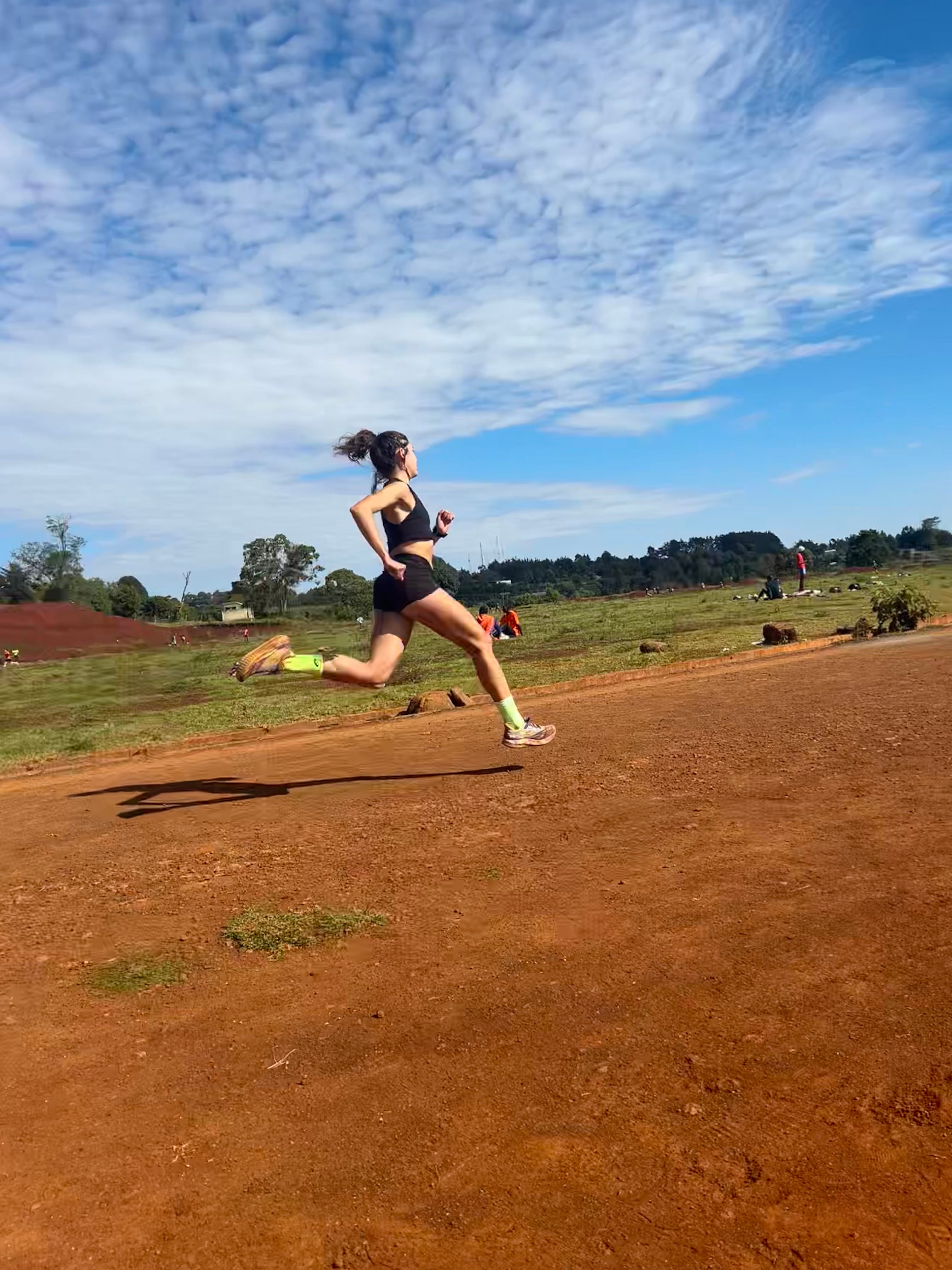
Meaning. That word kept coming to my mind throughout the entire training session, as an important life lesson I had just encountered. My economist-trained mind would even put it into a more sophisticated form: “maximize meaning, giving the restrictions of time, money, and energy”. Sometimes in life we have the pleasure of finding things that fulfill us - activities, tasks, communities - but it’s quite easy to take them for granted. Sometimes you kind of have it easily, without expecting; sometimes it’s something simple or familiar, and we think we ought to seek more. But when we do find this kind of thing that provides us with meaning - maybe without even knowing why, exactly, you just feel it - you have to preserve it.
It was over a year ago when I had had this same conversation with her, but on a different tone. Running had lost its meaning for me. It suddenly clicked: it seemed so silly to dedicate all this mental energy (besides the time, money, and effort) to run a certain number. I was tired of it. I wanted to dream with bigger stuff: I wanted to travel the world, write a book, buy an apartment, move cities, build an organization... And running, at that time, seemed like a trap that would tie my potential to dream to a clock. So I decided to take a break. Of course, as a long-term runner, I’d still go out for easy runs every other day, but I stopped the interval training, having a coach, and setting goals. Just for a while, at least.
It’s interesting how our motivations may vary drastically towards the same activity over time. From time to time, it’s relevant to reflect on what we’re putting our energy into, and whether it does make sense. To map the why behind things. Because it also shapes (and is shaped by) the how - the way we perceive and do something.
Two years ago, I went to Iten, in Kenya, the Land of the Champions. A small village in the mountains, in Elgeyo-Marakwet County, home to the world’s best long-distance running athletes. While there, I had the opportunity to visit a local NGO, Shoes4Africa, that provides training for children and adolescents and raises funds to build hospitals in the region. I followed the kids in two of their training sessions and could participate in their activities.
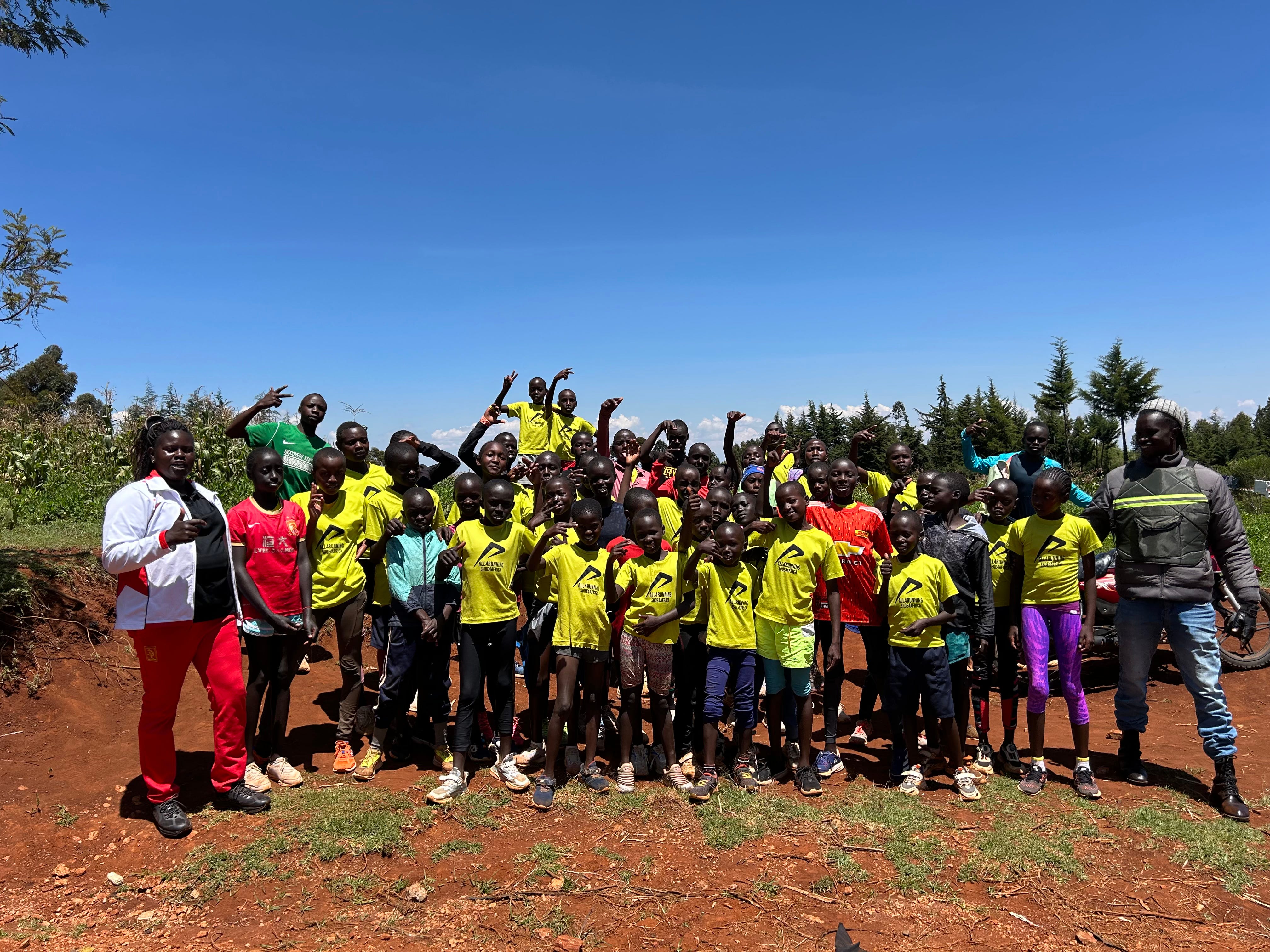
When the time came to say goodbye, I asked them to do a small exercise: I handed out paper and crayons, and asked them to write down (or draw) why they run. Dear reader, I’ve kept this very special drawing folder up until now, waiting for the special moment to go through them. The time has come. Roll the drums.
“I run to change my home, because at home I don’t get enough food. I want to see other countries.” (Elipaz)
“I run to have a stopwatch, a scholarship, running shoes, to get money, to help my family, to be rich” (A)
“I run because I see my future” (Emmanuel, 12 y.o.)
“I like running because it helps me to be healthy and I want to be a champion” (Vensoline, 12 y.o.)
“I run because I want to change my family and I want my future to be good” (Victorine, 13 y.o.)
“I run to help my family and other people” (Thaddeus, 12 y.o.)
“I run because I want to be a champion in the future. I am assertive and confident and also God fearing and discipline and kind”
Those kids were serious about it. Running is not merely a hobby; it’s a better life for them. It’s the golden ticket to overcome poverty, to help their community, to find their role in society. And even if not as a professional athlete, at least as a way to get a scholarship and have access to great education. Running in that setting is social mobility. And that’s a very forceful motivation.
But there was also something else - they’d run just for the sake of it:
“I run because it is fun and it is my talent”
“I run because it is my talent. I run because I love to run. I want to be like Kipchoge.” (Yan, 15 y.o.)
“I run because my mother runs and I saw my mother running races. When I was in Grade 5 I ran when I was at school and I love running” (Jackline K., 14 y.o.)
“I like running because it helps in health and in sports. When I run I just feel good for my body and running is better than anything in my life. I run to improve my health and to protect my health. It protects body from disease. (Jackline A., 14 y.o.)
“I run because I love running” (Jail, 12 y.o.)
Not necessarily for a future, not to achieve something, but because, well, it is fun, they are good at it, they’ve tried it as little kids and liked it. It’s their talent, and they have to honor it. It was quite insightful to see that other branch of motivations.


The psychologists and behavioral scientists in the room might already know where we are leading to: the difference between extrinsic and intrinsic motivation. According to the Self-Determination Theory (Ryan & Deci, 2000), the first state appears when we do an activity to achieve something - a reward, a goal, an identity - and the latter refers to a state in which we do an activity for the pleasure it brings, not aiming for something else. Intrinsic motivation cannot be chosen or controlled, it appears; however, there are factors that enable and support its occurrence - or stand in the way to it: autonomy, competence, and relatedness. Looking back, these components started eroding for me in the past.
It’s good to have a goal and to have ambitions. It can be quite motivating. But sometimes the ‘why’ is way simpler than that. It’s perfecting your craft, honing your abilities, fitting where you belong. It’s a feeling that this is something you’re meant to be doing - and that’s enough.
And, you know, now, after having travelled the world for a while, bought the apartment, launched the Institute, and on the verge of moving cities, chasing that PB in the half marathon actually seems kind of fun.
Sincerely,
A Moving Mind
Until next time!
Em 40 anos correndo, não sei exatamente porque comecei, porque continuo. Mas é certo que foram fases… com ou sem objetivos, e também com algumas pausas longas sem correr. Acho que funciona assim. Gostei de ler.
Boas corridas!